
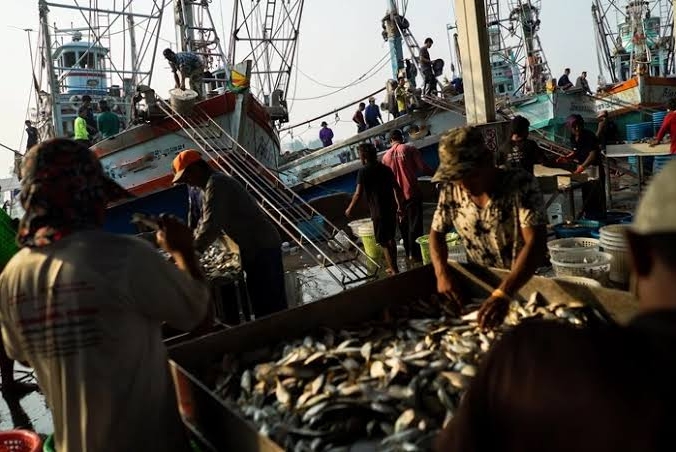
3 July 2021 The Seafood Working Group informs the Thai media that United States Department of State Released the Trafficking in Persons Report (TIP) 2021 on July 1, 2021, with Thailand downgrading to the Tier 2 Watch List (Tier 2 Watch List) and found that the Thai government did not Demonstrate efforts to tackle human trafficking as a whole. The problem with increased compared to last year. And the correction of forced labor among migrant workers is not effective. There are numerous reports and investigations addressing Thailand of labor abuse and human trafficking among migrant workers. especially in the fishing, seafood and clothing sectors. Thailand had been in Tier 2 for three years before. And the decision to downgrade is a sign that the government has failed to resolve the issue as it should.
in last April Seafood Working Group The US Department of State, a global alliance of 30 labor, human rights and environmental organizations, has submitted its views to the US Department of State. By recommending the downgrading of Thailand to a Tier 2 Watch list, the Working Group noted that Thailand does not meet the minimum standards set forth in the United States Trafficking Victims Protection Act. year 2000
The 2021 US TIP report highlights the key issues leading up to the downgrading:
· The Thai government conducts human trafficking investigations. prosecute suspects And convictions for human traffickers in 2020 are clearly less than the year before.
· Despite widespread reports that forced labor is prevalent among migrant workers in various industries in Thailand, Instead, the government said there were few victims of the labor trafficking in relation to the extent of the problem. Officials often lack understanding of labor trade. And the government lacks standard procedures for labor inspectors to refer cases with cause to legal authorities.
· Thai authorities have never reported a diagnosis of labor trafficking victims as a result of inspections of fishing boats at ports.
· Corruption/corruption and collusion by officials are still barriers to anti-human trafficking.
· Labor laws prevent migrant workers from forming unions, which could lead to continued exploitation.
· Thailand’s criminal defamation law continues to allow companies to Prosecute potential victims and victim aides including strategic lawsuits against public participation. This will result in victim advocates face years of legal harassment.
· Workers in the seafood processing and fisheries sector face more forced overtime. As a result of the growing demand for seafood during the epidemic The same is true for unsafe working conditions. by ship owners, brokers and crew chiefs Requires male and boy workers from Thailand, Burma, Cambodia, Vietnam and Indonesia to They are forced labor on fishing boats for both Thais and foreigners.
With this downgrade decision, JJ Rosenbaum, Executive Director JJ Rosenbaum: Global Labor Justice-International Labor Rights Forum GLJ-ILRF commented:
“The downgrade of Thailand in the 2021 TIP report reflects relevant trends and is well documented. This downgraded status was in line with the US government’s delisting of trade preferences. due to the apparent exploitation of labor rights especially in the fishing sector and among migrant workers. We call on the Thai government to take concrete action to promote freedom of association. including the ratification of ILO Conventions 87 and 98 as a solution to the problem of forced labor and labor trafficking. The freedom of protection of associations shall be exercised in a non-discriminatory manner regardless of their migrant status.”
Adisorn Kerdmongkol, Network Coordinator of Migrant Population Organizations (MWG), commented: “COVID-19 Exposing the weaknesses of Thailand’s anti-trafficking infrastructure In particular, the link between human trafficking and the control of migrant workers is not visible. Rather than understanding that victims of trafficking, such as migrants, will become more vulnerable in the wake of the epidemic. Instead, the government has ramped up labor vulnerability by ramping up crackdowns on undocumented and misdocumented workers. To brag about the state’s efforts to curb COVID-19, the arrested workers were deported without passing through the legal discrimination whether they were in forced labor. During the time of COVID-19 intensifying the economic downturn On the other hand, it tends to exacerbate human rights and labor rights violations.”
Papop Siemhan, director of the Human Rights and Development Foundation (HRDF), commented that “The harassment and exploitation of migrant workers in the fishing sector continues to be seen as the TIP report highlights fishermen facing wage fraud. working without a contract There are debt obligations with brokers and employers. Working up to 18 to 20 hours a day, 7 days a week with insufficient food, water or medical supplies. They also faced threats and assault by the ship’s sailors. It is hoped that this reasonable downgrade will eventually push the Thai government to stop fishing boat owners from the daily atrocities they commit to migrant fishermen.”
activists for the rights of migrant workers (Anonymous for security reasons) stated, “Considering how the Thai government has dealt with migrant workers using the regulatory security framework involved in curbing COVID-19, we see only the vulnerability of migrant workers. increasing and declining labor rights Coriander sprinkles showing improvements leading to upgrades in previous TIP reports have been eliminated. And Thailand is back in Tier 2 as it deserves, the main issue that hasn’t been resolved. If only to improve, such as allowing migrant workers to form unions. and a reformed registration system It will show that the Thai government is committed to protecting the rights of migrant workers and preventing human trafficking.”
 .
. 